Drywall Repair & Wall Patching in Agoura Hills
Cracks, damaged drywall, and unfinished wall patches can affect the appearance of an otherwise well-maintained home. WeHandy helps Agoura Hills homeowners restore damaged interior surfaces with careful drywall patching, surface preparation, and finishing.
Free estimates · Business liability insurance
Not Every Drywall Problem Needs the Same Repair
A crack, a hole, a loose seam, and an old patch can look alike from across the room. Each has a different cause, and each calls for a different fix. Knowing which one you have is the first step toward a repair that lasts.
Hairline and visible cracks
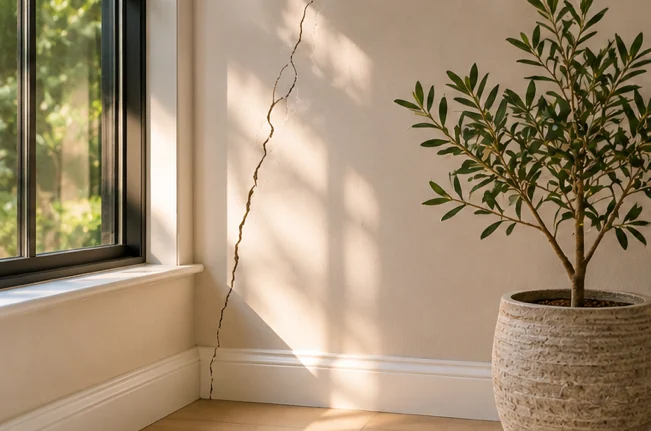
Cracks tend to start where drywall is under the most stress: along joints, at the corners of doors and windows, and where two surfaces meet. Wall crack repair for a hairline crack usually means opening it slightly, taping it, and refinishing the area. A crack that keeps reopening, or widens over time, may point to movement or moisture, and that is worth evaluating before it is patched again.
Holes and damaged sections
Drywall hole repair starts with the size of the opening. A small puncture from a door handle or a nail can be filled in place. A larger opening, such as one left by a removed fixture or a broken section, needs a patch with backing so the repair has something solid to attach to. The size of the opening and the firmness of the drywall around it decide which approach fits.
Damaged seams
Seams between sheets of drywall are covered with tape and compound. When the tape loosens or the compound cracks and lifts, a visible line appears. Drywall seam repair usually means removing the loose material, re-taping, and rebuilding the joint in thin layers.
Uneven previous repairs
A patch that bulges, shows its edges, or was never primed can stay visible long after it was painted over, especially when light crosses the wall at a low angle. Often the fix is to sand the old repair back, widen the feathering, and refinish it so the change from patch to wall is gradual.
Patch, Reinforce, or Replace?
The right method depends on the condition and location of the damage, not just its size. These four options sit on a scale from light to extensive. For an overview of our work, see drywall and wall repair.
Patching and replacement repair the wall surface. They do not solve structural problems or active leaks, which have to be addressed first by the right professional.
Minor surface repair
Small dents, nail holes, and superficial damage. Filled, sanded flush, and prepared for paint.
Seam reinforcement
Damaged joints and loose tape. The seam is re-taped and rebuilt so it is less likely to reopen.
Reinforced drywall patch
Larger openings. The opening is squared up, backed for support, and filled with a patch that is taped and finished.
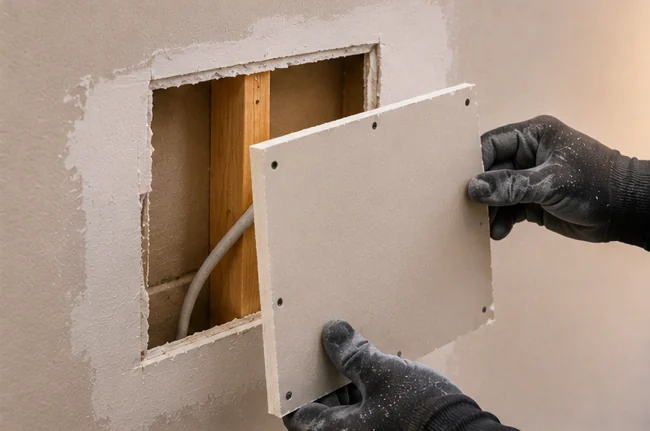
Section replacement
Drywall that is extensively damaged or no longer stable. The affected section is cut out and replaced with new board, as in the photograph.
Not sure which one your wall needs? Send photos of the area and we’ll tell you what we see.
The Finish Matters as Much as the Patch
A patch can be perfectly sound and still look wrong. Most of what the eye picks up is the drywall finishing: how smooth the surface is, how gently the repair blends into the wall, and how the paint sits over it.
Joint compound goes on in thin layers, each a little wider than the last, so the edge of the repair disappears into the wall. This is called feathering. Sanding between coats, once each has dried, takes down ridges before the next layer goes on.
Where the wall has texture, wall texture repair is part of the same job: the repaired area is textured to blend with its surroundings. How close the match gets depends on the texture and the age of the wall, and a perfect match is not guaranteed.
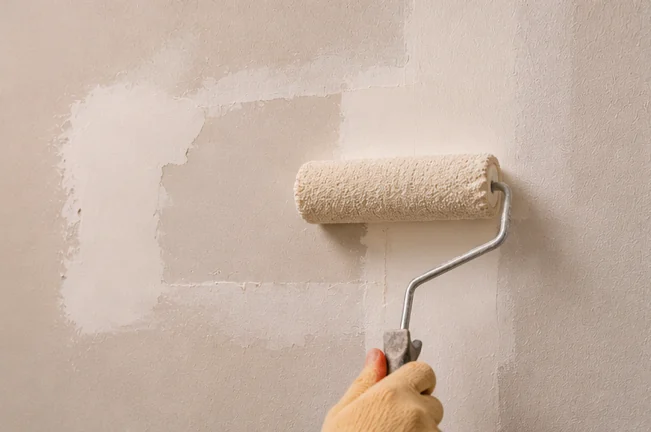
Finally, the surface is primed. Bare compound absorbs paint differently from the wall around it, and that shows as a dull patch. Priming evens it out and leaves a paint-ready surface.
Why lighting matters. Light that skims across a wall, from a window in the morning or a lamp at night, throws a shadow from even a faint ridge. A repair that looks flat in the middle of the day can show up in the evening, which is why we judge a patch in side light before calling it done.
What to Expect From a Drywall Repair
Knowing the sequence makes the schedule easier to plan around. This is how a typical repair unfolds.
Assessment
We start with the size of the damage, how firm the drywall around it is, whether there are signs of moisture, and what may have caused it. Photos give us a first opinion, and the final call is made when we see the wall.
Preparation
Some repairs need more groundwork than others. Loose paper and crumbling edges are cut back to sound board, and larger openings are backed before anything is patched.
Drying time
Joint compound has to dry between coats. How long depends on how thick the layer is, the humidity in the room, and the product used, so we check each coat rather than going by the clock.
More than one visit
Because of that drying time, a repair with several coats, or several repairs in one room, may take more than one visit. We lay out the schedule in your estimate.
The final surface
Lighting, wall texture, sheen, and the age of the existing paint all affect how a repair reads once it is done. We blend the repair into the wall, but we cannot promise that it will vanish.
Painting
Painting is a separate service unless it is part of your quoted project. The repair leaves the wall ready for primer and paint, and our painting page covers what we offer there.
Interior Drywall Repairs for Agoura Hills Homes
Most calls about interior wall repair are about one specific spot. These are the situations that come up most often.
Cracks around windows and doors. Openings are where walls flex most, so cracks often start at their corners.
Holes after a fixture comes off. Shelving, brackets, and hardware leave holes that are easy to patch and hard to ignore.
Openings left after plumbing or electrical work. When another trade has opened a wall, the drywall has to be closed and finished afterward. We handle that repair once the other work is complete, not the plumbing or electrical work itself.
Damaged wall corners. Outside corners take knocks from furniture and doors and are worth fixing before they spread.
Interior updates. A room being refreshed is a good time to settle small repairs, before the paint goes on.
Small areas before repainting. A fresh coat shows every flaw underneath it, so patching first saves the new paint.
WeHandy serves Agoura Hills and the surrounding communities as a service-area business, with no local office. For doors, mounting, and other upkeep around the house, see our Agoura Hills handyman services.
Careful Repairs Without Unnecessary Complexity
Clear, project-based estimates
Your estimate is built around the repair itself: its size, location, preparation, and finish.
Straightforward communication
Plain answers about what the repair involves and how long it may take.
Careful preparation
Loose material comes out and the area is prepared before anything goes on.
Attention to finishing
Thin coats, careful sanding, and edges blended into the wall around the repair.
Convenient scheduling
Open Monday through Saturday, 9am to 9pm, with Sundays by appointment.
Agoura Hills and nearby
We serve Agoura Hills and surrounding communities without a storefront. You send photos, we send an estimate, and we come to you.
Drywall Repair Questions From Agoura Hills Homeowners
Why do drywall cracks sometimes come back after repair?
Can a damaged drywall seam be repaired without replacing the wall?
What is the difference between drywall patching and drywall replacement?
Why does a repaired wall sometimes look uneven in sunlight?
Can you repair drywall openings left after plumbing work?
How long should joint compound dry before finishing?
Can a damaged corner be repaired without replacing the entire drywall panel?
What should I photograph when requesting a drywall repair estimate?
Drywall repair in other cities
Looking for drywall repair somewhere else in the Valley? Choose your city.
Drywall repair by city
Repairing walls for a rental, a listing or a workplace? See our pages for property managers, realtors and businesses.
Let’s Get Your Walls Looking Right Again
Have a crack, hole, or damaged drywall section? Send WeHandy a description or photos of the area and request an estimate for your repair.