
Drywall Repair & Wall Restoration in Calabasas
Damaged drywall doesn’t always require a major renovation. From holes left behind by wall-mounted fixtures to damaged corners and uneven surfaces, WeHandy provides focused drywall repairs that help restore the appearance of your interior.
Business liability insurance. Open Monday to Saturday, 9am to 9pm, and Sundays by appointment.
The Details That Make a Wall Look Unfinished
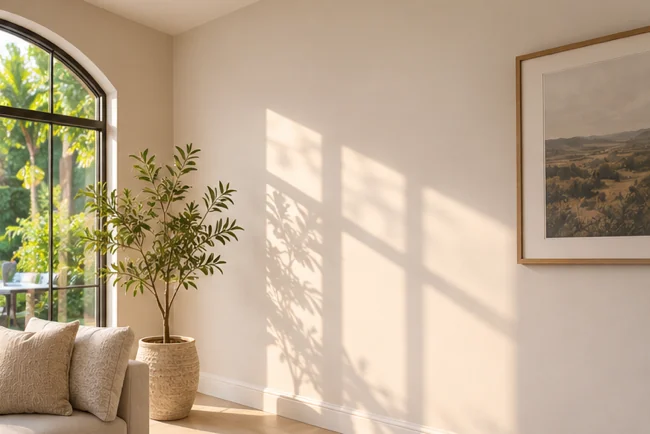
On a smooth, well-lit wall, even a small flaw is easy to see. Daylight sliding across the surface exaggerates every ridge, and a patch that looked flat in the afternoon can throw a shadow by evening. That is why a repair that is only slightly off often stands out more than the original damage did.
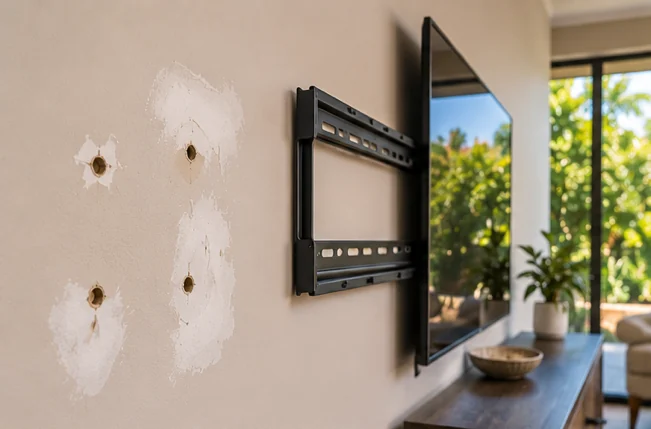
- Visible holes after a TV bracket comes offFour or six bolt holes in a rectangle announce exactly where the screen used to hang.
- Damage left by shelving and wall fixturesTorn paper around anchors, and holes that grew wider when the fixture was pulled out.
- Cracked or chipped cornersOutside corners take knocks from furniture, vacuum cleaners, and doors.
- Earlier repairs that were never finished wellA patch that bulges, shows its edges, or was never primed flashes through new paint.
- Rough patches around access openingsOpenings cut for other trades are sometimes closed with little more than a quick patch.
- Uneven spots that show in natural lightSide light turns a slightly raised patch into a visible shadow.
All photographs on this page are illustrations, not pictures of completed WeHandy jobs. For an overview of our drywall work, see drywall and wall repair.
The Right Repair for the Right Type of Damage
Not every blemish calls for the same fix. Here is how the common types of damage compare.
| Repair type | Typical damage | What the repair involves | Keep in mind |
|---|---|---|---|
| Small surface repairs | Dents, screw holes, and shallow surface damage | Filled with compound, sanded flush, and prepared for paint. | Usually the quickest repair, but each coat still needs time to dry. |
| Drywall patching | Larger openings, punctures, and damaged sections | A reinforced patch or a replacement section is set in, then taped and finished. | The size of the damage and the condition of the surrounding board decide the method. |
| Seam and corner repairs | Cracked seams, loose tape, and chipped corners | Loose material is removed, the joint is re-taped where needed, and the seam or corner is rebuilt and finished. | A seam that keeps cracking can point to movement, and we will tell you what we see. |
| Texture and surface blending | Visible repair edges and mismatched texture | The repair is feathered into the wall and the texture is blended where practical. | A perfect match is not guaranteed, especially on older or unusual textures. |
| Ceiling drywall repairs | Accessible ceiling patches and damage around fixtures | The same methods, with extra care for flatness, since side light exaggerates flaws on a ceiling. | Active leaks and structural problems are outside what we repair. Moisture has to be resolved first. |
When the Damage Is Overhead
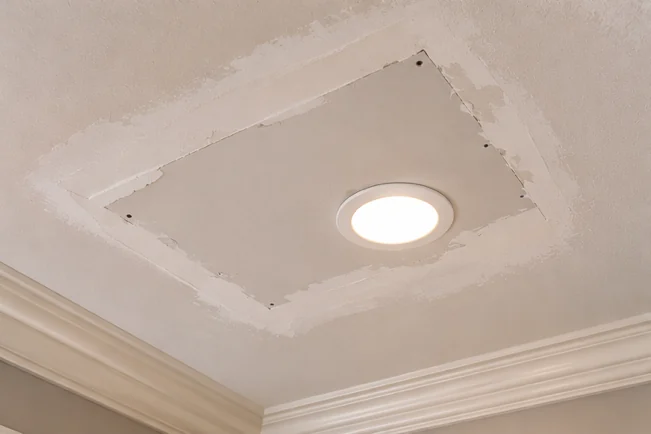
Ceiling patches around recessed lighting are a common result of fixtures being replaced, moved, or removed. We repair the accessible drywall around the opening: cracks, chipped edges, and old patches, finished flat so the ceiling reads as one surface.
We do not do electrical work. If a light has to be taken out or put back, that should be handled by an electrician.
Not sure which of these repairs your wall needs? Send a photo and we’ll tell you what we see.
Why Surface Preparation Matters
Filling a hole is the smallest part of a good repair. What happens before and after the compound goes on decides whether the wall looks restored or just patched.
Take out what is loose
Crumbling edges, torn paper, and flaking paint come off first, so the repair bonds to solid material.
Choose the method that fits
A small hole can be filled in place. A larger one needs a patch or a replacement section, chosen after seeing how sound the surrounding drywall is.
Reinforce where it is needed
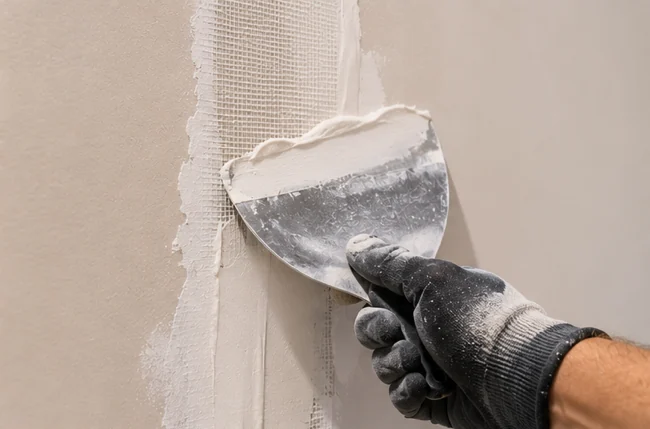
Seams and patch edges get mesh or paper tape, which makes them less likely to crack again.
Build up in suitable layers
Joint compound goes on in thin layers. Thick coats dry unevenly and tend to shrink.
Give each layer time to dry
Every coat has to dry before the next, which is why a repair rarely fits into one sitting.
Sand, blend, and prepare
Sanding creates a smooth transition into the wall. Texture is matched where practical, and the surface is left ready for primer and paint.
Does Damaged Drywall Need to Be Replaced?
Often repairable in place
- Small holes and dents
- Cracked seams where the board is still firm
- Chipped corners
- Shallow surface damage
Needs a closer look first
- Large openings or crumbling drywall
- Soft, sagging, or stained areas, which can signal moisture
- Damage that keeps coming back
- Sections that feel loose or unstable
Whether a repair or a replacement fits depends on what the wall looks like once the damage is exposed, and the condition of the material around it matters as much as the damage itself. We can’t tell which one you need from a description alone, which is why photos or a visit come first.
If moisture is involved, the source has to be corrected before any drywall is restored.
Drywall Repairs for Calabasas Homes
Most drywall and wall repair work in Calabasas begins with something being changed or removed: a TV moved to another wall, shelving taken down, a room being updated before paint.
What is left behind is a short list of specific repairs: the holes where a bracket came off, a chipped corner, a cracked seam, a patch that was never finished properly, or an opening that was closed roughly after other authorized maintenance work. When it is time to repaint, a smooth, clean surface makes the difference.
WeHandy provides drywall repair in Calabasas as a service-area business, with no local office. Send photos with your quote request and we will work out the repair. For doors, mounting, and other upkeep around the house, see our Calabasas handyman services, or our painting page if the wall is next in line for a fresh coat.
Careful Work. Clear Communication.
Project-based estimates
A quote for your specific repair, based on its size, location, and finish, not a generic rate.
Preparation and finishing
Most of a repair's quality comes from the work before and after the patch itself.
Straightforward communication
Plain answers about what the repair involves and what to expect.
Convenient scheduling
Ask for a quote online or by phone. Hours are Monday through Saturday, 9am to 9pm, with Sundays by appointment.
Residential repair experience
Drywall patching and finishing are part of our regular residential repair work.
Service in Calabasas
We serve Calabasas as a service-area business, with no local office. We come to you.
“Had WeHandy come out to our house in Calabasas for a drywall repair. Really happy with how it came out, you can barely tell there was damage there before. He was on time, clean and easy to work with.”
Alena Ras, Calabasas
Customer review from our homepage
Questions About Drywall Repairs in Calabasas
Can drywall be repaired after removing a wall-mounted television?
Why do some drywall patches remain visible after painting?
Can damaged drywall corners be repaired?
Is replacing a drywall section always necessary?
How do you determine whether drywall damage is repairable?
Can several wall imperfections be repaired during the same appointment?
Does drywall repair require sanding and multiple coats?
What information should I provide when requesting an estimate?
Drywall repair in other cities
Looking for drywall repair somewhere else in the Valley? Choose your city.
Drywall repair by city
Repairing walls for a rental, a listing or a workplace? See our pages for property managers, realtors and businesses.
Have a Wall That Needs Attention?
Tell us what happened, where the damage is located, and what kind of finish you’re looking for. WeHandy can help you discuss the next steps for your drywall repair project.